A diner chair that looks affordable can become the expensive option once a missing glide exposes a metal leg end, scraping interrupts conversation, seams slow closing work, or loose joints force early replacement. Operators choose the chairs, but guests, servers, cleaners, floors, and maintenance budgets absorb the consequences, which is why purchase price alone is an incomplete measure.
Which diner chairs are suitable for high-turnover indoor restaurant service?
Diner chairs for high-turnover indoor service should pass a commercial-use screen covering verified structural testing, stable geometry, cleanable surfaces, floor-compatible glides, repair access, and replacement-part availability.
- Define the workload: record the restaurant format, indoor location, average daily covers, peak turns per seat, typical guest dwell time, and planned ownership period.
- Check the room: document table height, apron and pedestal clearance, aisle width, chair spacing, floor material, thresholds, and storage routes.
- Screen the construction: require commercial-use documentation, stable joinery, accessible fasteners, replaceable glides, cleanable finishes, and repairable seats or backs.
- Verify support: obtain the warranty, exclusions, claim procedure, spare-part prices, order minimums, lead times, and expected support period.
A diner chair specification should begin with service conditions, not visual style
The operating brief should tell suppliers how the chairs for the dining room will be used before colors, upholstery, or silhouettes enter the discussion. Record the seat count and mix of two-tops, four-tops, booths, counters, and accessible dining surfaces. Indoor specifications should also be separated from outdoor restaurant seating requirements, which add weather, drainage, and ultraviolet-exposure concerns.
Chair weight matters because servers and cleaners repeatedly pull, lift, and reset restaurant furniture chairs. Set a maximum acceptable handling weight through an on-site trial rather than a catalog judgment. If chairs must stack, specify the required stack quantity, storage footprint, transport route, and protection against frames or glides marking adjacent seats.
The brief should also state the target budget per installed seat and planned service life. Installed cost includes freight, assembly, required glides, spare components, and any floor-protection changes, not just the chair invoice.
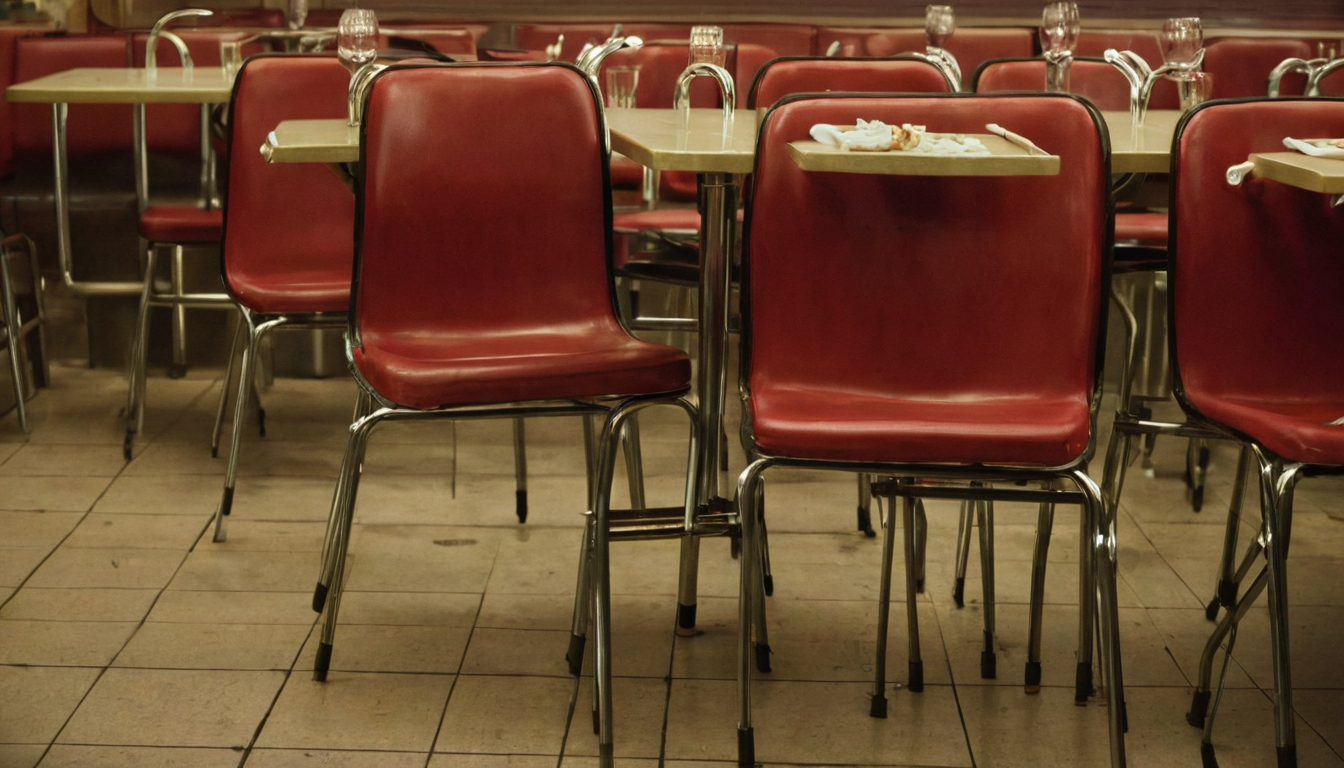
Which diner chairs are suitable for high-turnover indoor restaurant service shown with practical context cues.
Commercial test claims for restaurant chairs must be traceable
Labels such as “contract grade” and “heavy duty” are not substitutes for test evidence. Ask for the named commercial seating standard, its edition, the laboratory, tested model, exact configuration, and reported result. Depending on the market and chair category, supplier records may reference standards such as ANSI/BIFMA X5.4 or EN 16139, but the supplier must show that the cited scope and current edition apply to the proposed restaurant use.
Confirm that upholstery, arms, glides, frame joints, and optional components match the tested chair. Any user-weight claim should identify its supporting test rather than appearing only in sales copy. Once structural suitability is established, the next decision is whether the diner tables and chairs fit real bodies comfortably without making standing, circulation, or table turns harder.
How do seat dimensions make diner chairs comfortable without slowing table turns?
Comfortable diner chairs support the expected guest population without forcing knees into table aprons, pressing the seat edge behind the legs, or making standing difficult. Seat height, usable depth, clear width, back support, cushioning, table clearance, and expected meal duration must be evaluated as one system rather than against a universal dimension.
Diner chair comfort must be tested with the actual diner tables and chairs
A full-scale mock-up should use the intended chair, tabletop, apron, and pedestal. Measure finished seat height under load, cushion compression, usable depth, clear width, knee clearance, and the distance needed to pull out the chair. A soft cushion can lower the seated guest enough to make an otherwise acceptable table apron restrictive.
Observe guests and staff representing different body sizes and mobility needs as they sit, reach, eat, stand, and pass behind occupied seats. Look for thighs contacting the apron, feet losing stable floor contact, the front edge pressing behind the knees, or a pedestal forcing an angled posture. Excessive pull-out distance can narrow server circulation and make reseating tables slower.
Accessibility review should cover dining-surface integration, clear floor space, circulation routes, and applicable requirements in the restaurant’s jurisdiction. Chair trials do not replace that review, but they can expose conflicts between planning dimensions and actual furniture placement.
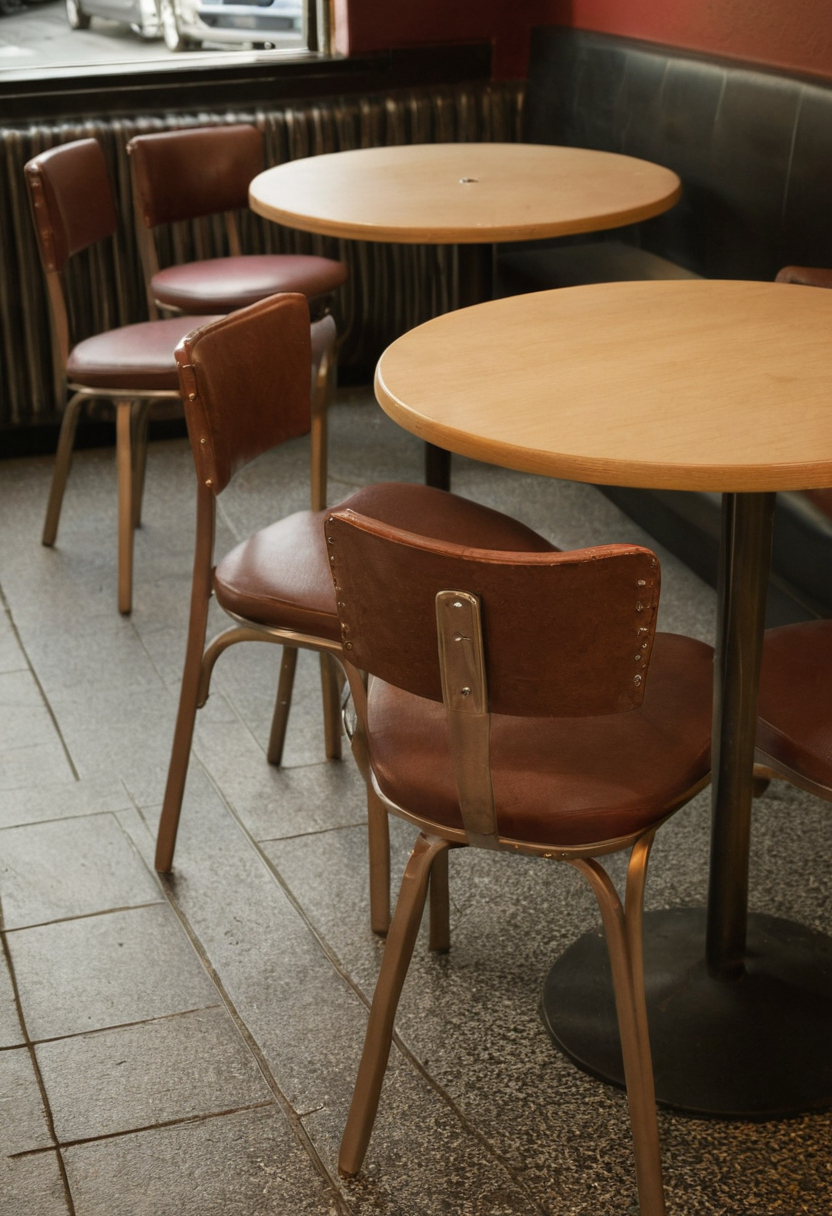
How do seat dimensions make diner chairs comfortable without slowing table turns shown as an editorial planning reference.
If a mock-up involves freshly applied finishes, adhesives, or other products that emit volatile organic compounds indoors, the U.S. Environmental Protection Agency recommends increased ventilation during product use. Schedule such work so testing does not interfere with occupied service.
Longer meals require different restaurant chair support than short visits
Meal duration changes which discomforts matter. A firm, lightly shaped seat may work for quick service, while longer diner, cafe, or full-service visits place greater demands on pressure distribution, back-support position, front-edge shape, posture, and heat buildup. Operators should check typical and upper-range dwell times in point-of-sale or reservation records before approving cushioning.
Foam specifications should document density, firmness, thickness, and compression performance, but paperwork cannot reproduce a full meal. Pilot users should remain seated for realistic service periods, then report pressure points, sliding, back fatigue, trapped heat, and standing effort. The goal is not a chair that encourages discomfort to accelerate turns. It is support that avoids guest distraction without obstructing service flow.
Once chair geometry passes the table-and-dwell-time test, the next question is which materials can survive repeated cleaning without seams, coatings, foam, or edges failing early.
Which diner chair materials are easiest to clean without premature damage?
The easiest diner chairs to maintain have accessible surfaces, few soil-catching seams, sealed edges, and finishes proven compatible with the restaurant’s actual cleaners and disinfectants. A generic wipe-clean claim is inadequate because performance changes with upholstery chemistry, soil type, dilution, contact time, application method, and cleaning frequency.
- Record each front-of-house product, active ingredient, dilution ratio, contact time, application method, and daily frequency.
- Obtain chemical-resistance data for upholstery, thread, adhesive, foam barriers, wood finishes, powder coatings, and plastic components.
- Check cleaning instructions and prohibited chemicals from both the chair manufacturer and upholstery supplier.
- Confirm applicable upholstery flammability requirements with the project team and local authority for the jurisdiction and occupancy.
- Review operator records for common soils, cleaning time, recurring damage, and reasons chairs were previously retired.
Upholstery seams and seat edges are critical diner chair cleaning risks
Piping, tufting, stitch holes, cushion undersides, back gaps, and exposed edges can trap crumbs and moisture after the broad seat surface appears clean. Inspect physical samples from standing and seated positions, then turn each chair over to check whether staff can reach the underside without tools.
A timed soil trial should use representative grease, sauce, dairy, and beverage residues with the approved procedure. For EPA-registered disinfectants, staff must follow mandatory label directions for dilution, application, contact time, and surface limitations because use inconsistent with EPA-approved pesticide labeling violates federal law. The trial should also reveal whether repeated wetting softens adhesive, discolors thread, or leaves residue in seams.
Abrasion ratings do not prove complete restaurant upholstery durability
An abrasion result measures performance under a named test and stated conditions, not resistance to every restaurant failure. Review the test method alongside seam slippage, crocking, lightfastness, staining, coating adhesion, flexing, chemical resistance, and hydrolysis data for coated fabrics exposed to humidity or frequent wet cleaning.
Warranty language matters as much as the headline rating. Check whether cracking, peeling, staining, seam failure, and cleaner damage are covered, excluded, or treated as normal wear. Cleaning products, furnishings, paints, and finishes can contribute indoor volatile organic compounds, as identified in EPA indoor-air guidance, so product selection should account for ventilation and service-hour use.
Once the covering survives the cleaning trial, the next hidden variable is below it: diner chair glides determine floor damage, movement effort, and dining-room noise.
Diner chair glides determine floor damage, movement effort, and dining-room noise
Diner chair noise and floor wear depend on the interface among the chair leg, glide, trapped debris, and finished floor. The correct replaceable glide must be selected and tested for the installed wood, tile, terrazzo, resilient flooring, concrete, or carpet under realistic guest loads and cleaning conditions.
The correct diner chair glide is specific to the installed floor
Flooring specifications should identify the exact product, finish, maintenance system, warranty conditions, and approved furniture protection. Chair specifications should record the leg material, leg-end geometry, attachment method, and compatible felt, polymer, nylon, metal, or other glide options. Written guidance from both suppliers is more reliable than a universal material recommendation.
An on-site test should load the chair, then reproduce pulling, pushing, turning, and repositioning on a representative floor area. Repeat the test after introducing the small amount of grit likely to survive between cleanings. Inspect for scratches, marks, indentation, glide detachment, and increased drag. Compare scraping and impact noise during occupied conditions, especially where hard walls, ceilings, and floors create a reverberant room.
A diner chair glide inspection should be part of closing maintenance
Closing staff should check chair feet for missing, loose, uneven, worn, or debris-loaded glides at a frequency based on observed wear. A missing glide can expose a metal leg end, turning routine chair movement into floor damage and a sharp sound that competes with conversation and music.
The maintenance record should name the responsible person, replacement trigger, spare-storage location, glide part number, required tool, and components used. Procurement should also document unit price, minimum order quantity, lead time, and pilot labor. That record leads to the next cost question: repairable diner chairs save money only when replacement components remain obtainable.
Diner chair glides determine floor damage, movement effort, and dining-room noise shown as an editorial reference for proportion and finish coordination.
Repairable diner chairs cost less only when components remain obtainable
Repairable diner chairs can reduce waste and capital spending when seats, backs, glides, fasteners, and upholstery panels can be replaced safely with ordinary tools. That advantage disappears when components are proprietary, undocumented, unavailable in small quantities, or too slow and costly to install within the restaurant’s service window.
Restaurant chair frames should be inspected at their likely failure points
Procurement files should include an exploded parts diagram, written frame specifications, current component prices, minimum order quantities, lead times, finish availability, and warranty restrictions. Inspections should target loosened wood joints, split rails, cracked welds, bent legs, failed fasteners, corrosion, delamination, and moving upholstery panels. Staff also need criteria that separate cosmetic wear from repairable damage and defects requiring immediate removal from service. Local labor rates and expected downtime determine whether a technically repairable chair is economical to fix.
Stacking diner chairs require tested handling and storage procedures
Stacking approval should follow the manufacturer’s stated orientation and stacking limit, then be verified through repeated staff trials. Operators should record stack weight, cart compatibility, route clearance, storage footprint, lifting effort, finish abrasion, and upholstery compression. An unstable stack, blocked egress route, or crushed seat edge converts storage efficiency into a safety and replacement problem. Parts availability establishes repair potential, but the next calculation is broader: what is the true replacement cost of diner chairs?
What is the true replacement cost of diner chairs?
The true cost of diner chairs includes purchase, freight, assembly, storage, cleaning labor, replacement parts, floor damage, downtime, disposal, and future matching problems. Operators should compare annualized cost per usable seat over a defined ownership period, using actual labor rates, service volume, failure records, supplier lead times, and residual value.
A diner chair cost comparison should use annualized cost per usable seat
Calculate installed cost from the quoted chair price, freight, delivery, assembly, taxes, and minimum-order requirements. Add annual cleaning, chemical use, glides, fasteners, upholstery panels, refinishing, structural repairs, floor repairs, emergency purchases, and downtime. Subtract expected salvage value, then divide the ownership-period cost by years of service and the number of usable seats.
Run low, expected, and high scenarios using documented changes in chair retirement, repair frequency, labor minutes, occupancy, and supplier premiums. State the analysis period and any assumptions for inflation or discounting. A low-priced chair becomes costly if repeated failures leave dining-room seats unavailable.
Reupholstering a diner chair should be compared with like-for-like replacement
Obtain at least two itemized commercial upholstery quotes separating covering material, foam, webbing, frame repair, pickup, labor, and tax. Compare them with two delivered replacement quotes that include equivalent commercial performance, finish matching, lead time, warranty, and partial-order surcharges.
Recovery changes only the covering; full reupholstery may require foam, support, and frame work. Include spare-chair needs, service downtime, expected post-repair life, warranty effects, and confirmation that specified materials satisfy applicable performance and fire requirements. Before committing to either option, a service-floor pilot is the safest way to approve diner chairs.
A service-floor pilot is the safest way to approve diner chairs
Diner chairs should be approved only after a small sample is used with the intended tables, flooring, cleaning products, staff routines, and representative guests. A documented pilot exposes rocking, drag, noise, awkward clearances, slow cleaning, finish damage, and repair obstacles before those problems multiply across a full order.
The diner chair pilot should reproduce a full service cycle
The pilot plan should define the sample quantity, test duration, table locations, service periods, and approximate guest use. Place chairs in both demanding and typical positions, such as a busy aisle, a wall table, and a quieter corner. Set pass-fail thresholds for stability, comfort, movement effort, scraping noise, cleaning time, visible damage, loose components, and maintenance interventions.
- Record the starting condition. Photograph glides, leg ends, fasteners, upholstery seams, finishes, and the floor beneath each chair. Measure or mark anything that could shift, compress, loosen, or wear.
- Run opening and occupied service. Assign a manager to document chair movements, rocking, clearance conflicts, guest complaints, and staff handling. Use consistent staff and guest questions with the same rating criteria throughout the pilot.
- Test spills and cleaning. Apply representative food and beverage soils to designated samples, then follow the restaurant’s approved cleanup procedure. Record dwell time, labor, seam access, residue, discoloration, and drying time.
- Complete closing inspection. Stack the chairs only if the model is intended for stacking. Inspect glides, floors, finishes, upholstery, welds, joints, and fasteners after cleaning and repositioning.
Before-and-after records matter because memory favors the attractive sample and discounts small defects. A glide that needs replacement during a brief pilot or a seat that takes twice as long to wipe should trigger a cost and workflow review.
The restaurant chair purchase order should lock down components and support
The approved sample should become the purchasing reference, not merely a showroom example. The purchase specification should identify the model, dimensions, frame and finish, upholstery batch details, foam, glide part number, applicable test reports, warranty, replacement parts, lead time, and inspection rights. Component substitutions should require written approval.
The supplier should confirm that production diner chairs will match the approved sample and explain delivery inspection, defect reporting, warranty response, and replacement procedures. Initial spare-chair and spare-component quantities should reflect supplier lead times and the operational risk of losing usable seats.
Approve the chair only when the pilot records and purchase order describe the same repairable, cleanable, quiet product. That decision turns appearance-led buying into controlled cost-per-seat planning.
Frequently asked questions about diner chairs
Diner chair costs depend on construction, freight, local labor, upholstery, repair access, order size, and supplier support. These questions help operators request comparable quotations instead of relying on incomplete unit prices.
How much do commercial diner chairs typically cost after freight, assembly, spare parts, and maintenance are included?
There is no reliable universal installed price. Request an itemized delivered quotation, then add assembly, required glides, initial spares, cleaning labor, expected repairs, floor protection, and replacement risk. Compare options by annualized cost per usable seat over the same analysis period.
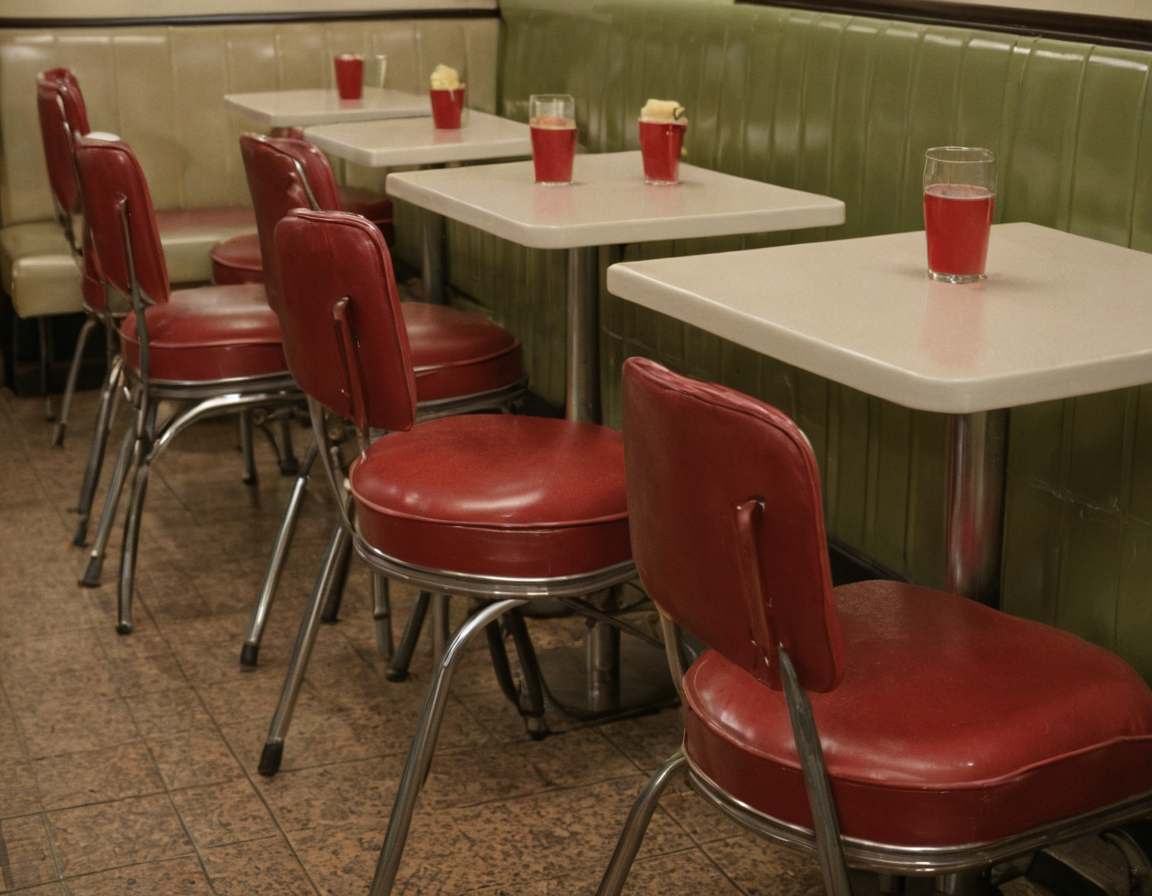
Frequently asked questions about diner chairs shown with practical context cues.
How much does it cost to have diner chairs recovered or fully reupholstered?
Recovery and reupholstery prices vary by chair construction, fabric, foam condition, frame work, transport, and local labor. Ask commercial upholsterers to separate covering material, foam, webbing, repairs, pickup, labor, and tax so the quotations can be compared fairly.

0 Comments