A manager testing outdoor restaurant seating should ask whether each chair can survive wind, pollen, stacking, cleaning, and a 45-minute lunch turn. A patio becomes profitable only when restaurant tables and chairs support weather exposure, guest comfort, accessible routes, staff movement, and fast resets.
Outdoor restaurant seating should be chosen by climate, service pace, and permit limits before style.
Outdoor restaurant seating works best when operators start with climate, meal period, dwell time, and local outdoor dining rules. A sidewalk cafe, bakery patio, rooftop bar, and full-service restaurant need different restaurant chairs because wind, storage, cleaning frequency, and server routes change the real cost of each seat.
- Confirm the operating boundary: sidewalk, curbside lane, private patio, roof deck, parking conversion, or event zone.
- Match seating to the daypart: coffee seats can be smaller and faster, while dinner and drinks need more comfort and tabletop area.
- Map the weather load: rain, humidity, salt air, freeze-thaw cycles, sun, and wind decide whether light, woven, wood, resin, or metal pieces create more labor than revenue.
Which outdoor restaurant seating variables change revenue per seat?
Revenue per seat changes with check size, turn target, table mix, and staff path length. A two-top that resets cleanly during lunch can outperform a lounge chair that blocks a tray route. Test chair pullback, menu placement, guest bag space, and bus-tub access before approving the layout.
When is commercial-grade outdoor furniture necessary instead of residential patio furniture?
Commercial-grade outdoor furniture becomes necessary when seating faces daily public use, frequent stacking, chemical cleaning, and warranty scrutiny. The U.S. Access Board explains that ADA accessibility standards apply to covered places of public accommodation and commercial facilities, and that DOJ standards govern most facilities outside public transportation.
The best outdoor restaurant chairs and tables depend on weather exposure, cleaning chemistry, and handling.
The best outdoor restaurant chairs are not always the heaviest or most expensive. Powder-coated metal, aluminum, resin, teak, and synthetic weave each succeed or fail according to sun, salt, rain, grease, cleaning products, stack storage, and nightly moving.
- Check the commercial warranty: review exclusions for salt air, chlorine, pressure washing, harsh chemicals, storage, and residential-only coverage.
- Ask for replacement parts: glides, feet, caps, screws, sling panels, and touch-up finish prevent one missing foot from becoming a rocking complaint.
- Test the reset: one server should be able to move, wipe, align, and re-seat the piece without scraping the deck or blocking service.
Which restaurant furniture chairs hold up in rain, sun, salt air, and freeze-thaw climates?
Climate should narrow the material list before color does. Wirecutter’s patio furniture review, a consumer source rather than a restaurant specification, says outdoor dining furniture lasts with less effort when the material suits the climate.
Aluminum suits rainy patios because staff can move it quickly, but light frames may shift in wind. Powder-coated steel adds weight, but chips and seams need rust checks. Resin and polypropylene work for fast cafes and washdowns if the grade resists UV fading. Teak fits premium patios with planned maintenance. Synthetic weave and rope soften lounge zones, but food can lodge in the weave.
Which outdoor restaurant table tops clean fastest between turns?
Fast turns favor nonporous tops with sealed edges, minimal seams, and no grooves around the rim. Compact laminate, coated metal, resin, and quality composite tops usually wipe faster than slatted wood or heavily textured surfaces because crumbs, pollen, sugar, and sauce have fewer places to sit.
Tabletop color also affects service. Glossy black can show water rings and glare; pale matte surfaces can make menus easier to read but show espresso drips. For menu access, AccessibilityChecker.org says Braille and large-print menus are recommended for guests with visual disabilities, while the ADA does not specifically mandate those formats; the obligation is better framed as effective communication.
When should a patio use heavy restaurant tables and chairs for wind?
Windy patios need weight, but weight alone is not a safety plan. Heavy restaurant tables and chairs can reduce skidding, yet umbrellas, heaters, planters, barriers, and loose chairs still need manufacturer-approved use, storm procedures, and local permit compliance.
Outdoor restaurant seating layouts must protect ADA routes, server movement, and guest comfort.
An outdoor restaurant seating layout should be drawn from the accessible route outward, not squeezed in after furniture is purchased.
How should a restaurant calculate patio seat count without blocking service flow?
Patio seat count starts with a scaled plan. Mark the permit boundary, doors, ramps, tree pits, hydrants, heaters, planters, host stand, bussing station, POS route, and the path from kitchen or bar to every table.
| Layout test | What to measure | Operational consequence |
|---|---|---|
| Public route | Clear pedestrian path beside sidewalk dining | The ADA National Network says sidewalk dining must preserve an accessible route, generally at least 36 inches wide, with short reductions to 32 inches under limited conditions. |
| Surface and slope | Running slope, cross slope, lips, grates, and thresholds | Accessible walking surfaces on these routes are limited to a 5 percent running slope and 2 percent cross slope under the same guidance. |
| Permit boundary | Sidewalk, patio, parking area, parklet, street closure, or festival zone | The Chester County Planning Commission notes that municipalities may regulate outdoor dining through zoning ordinances, municipal codes, or permits. |
Server circulation needs its own mock test. A manager should walk the patio with a tray, water pitcher, bus tub, and check presenter during a simulated full turn. If one two-top blocks the only clean route to the bussing station, that table is friction, not revenue.
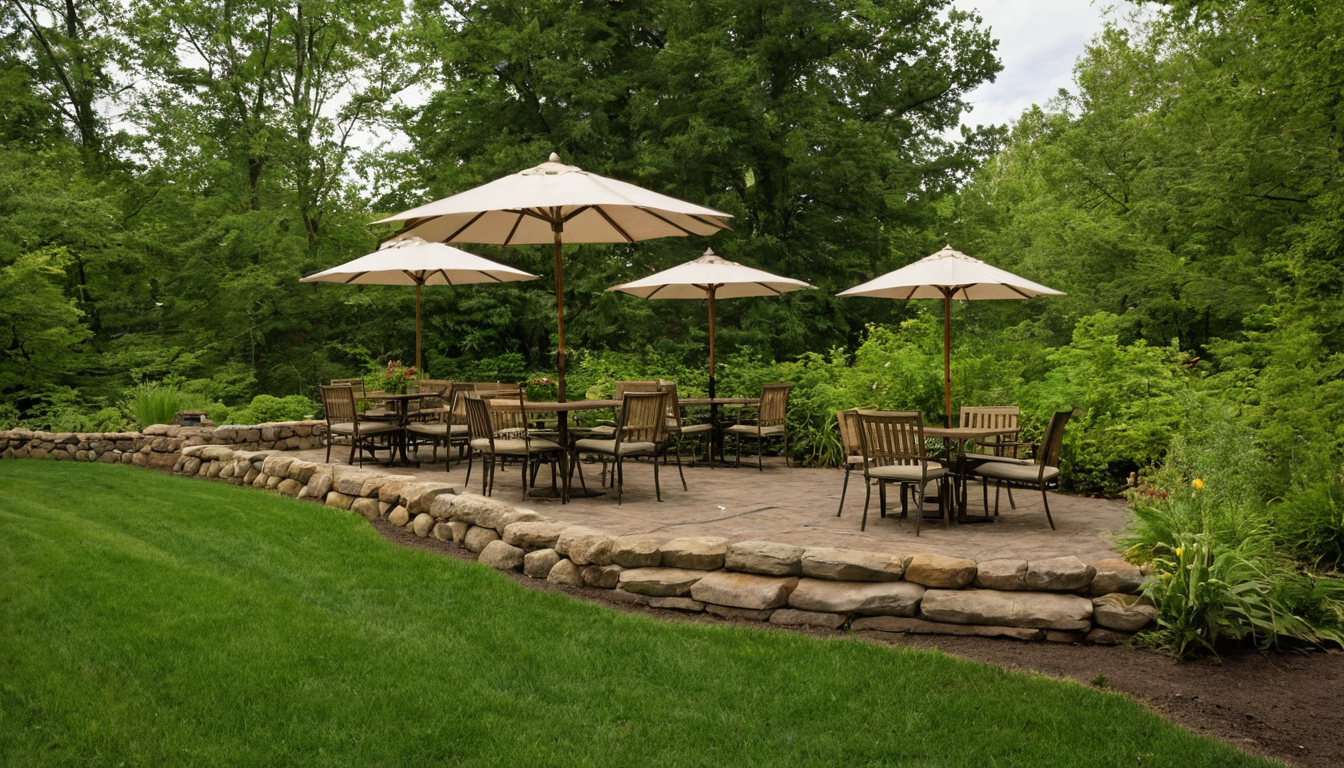
Outdoor restaurant seating layouts must protect ADA routes, server movement, and guest comfort shown as a landscape planning reference.
Where should accessible outdoor tables be placed?
Accessible outdoor tables should sit on the same desirable patio floor as other guest tables, close to the main service rhythm but not in the pinch point at the door. The 2010 ADA Standards specify a 30 by 48 inch clear floor or ground space for wheelchair positioning, so plan that space with the chair pulled out.
Outdoor restaurant seating needs acoustic, wind, shade, and lighting controls to stay usable.
Outdoor restaurant seating fails when guests technically have chairs but cannot hear, see the menu, or sit comfortably. Street noise, reflective walls, wind tunnels, harsh sun, and dark corners reduce dwell quality and ordering confidence.
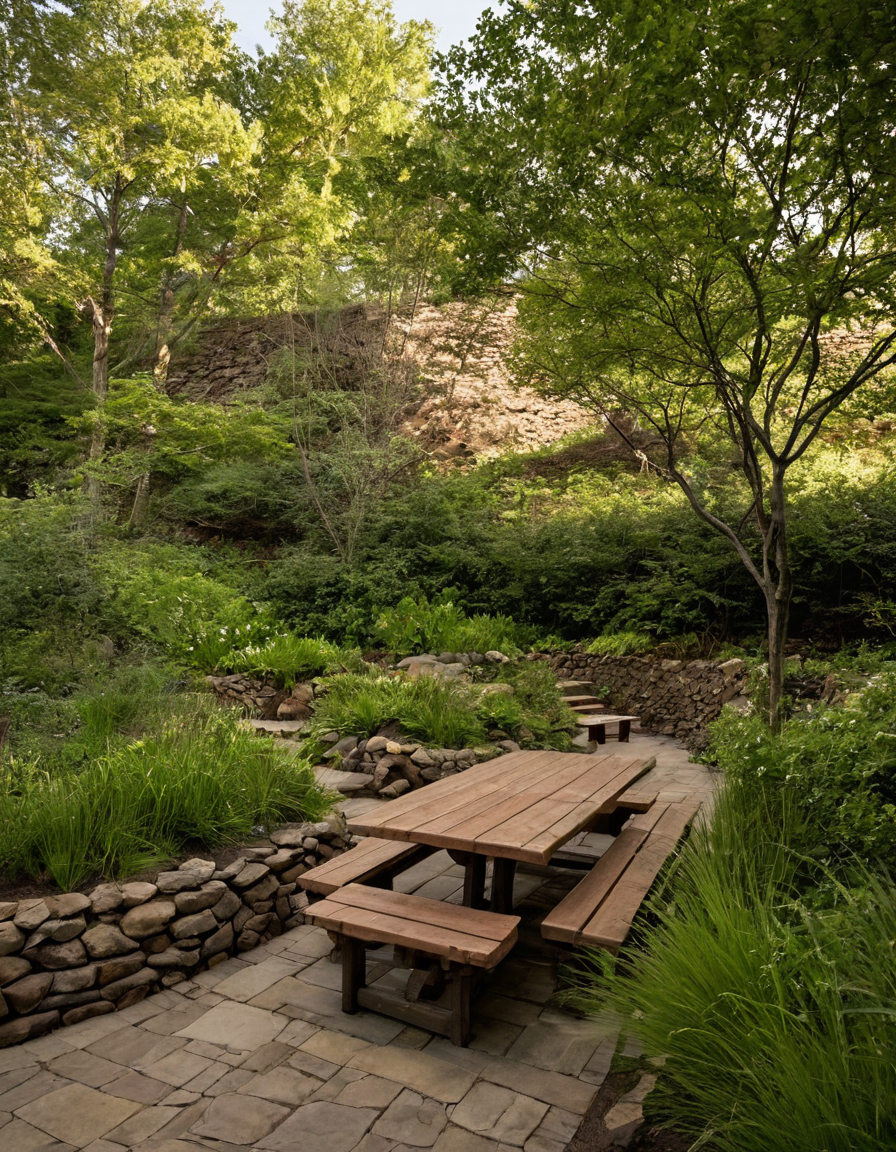
Outdoor restaurant seating needs acoustic, wind, shade, and lighting controls to stay usable shown with outdoor scale and terrain cues.
How can outdoor seating reduce noise without enclosing the patio?
Patio noise control starts with the seat map, not the speaker volume. Place two-tops and solo coffee seats away from traffic lanes, delivery doors, rooftop equipment, neighboring music, and hard masonry corners that bounce sound back across the table.
Planters, banquettes, outdoor curtains, permitted screens, and canopy edges can soften exposure while keeping the patio open. The practical test is whether a server can confirm an order without leaning over glassware.
How should patio lighting support menu reading and table turns?
Patio lighting should make faces comfortable, menus readable, paths legible, and resets fast. Glare from bare bulbs, deep shadows under umbrellas, and unlit service stations slow ordering and make staff miss crumbs, spills, uneven pavers, and dropped cutlery.
Layer low-glare table light, path light, host-stand light, and service-station light rather than relying on one bright fixture. This is where lighting affects guest decision-making and service rhythm: guests order with more confidence when they can read the menu, and staff turn tables faster when surfaces are visible.
Cleaning, storage, and reset workflows decide whether outdoor restaurant seating stays profitable.
Outdoor restaurant seating creates profit only when staff can reset each table quickly and keep it presentable after pollen, rain, bird droppings, spilled drinks, and sidewalk dust. The right restaurant chairs are light enough to move, stable enough for guests, and simple enough to clean during real service windows.
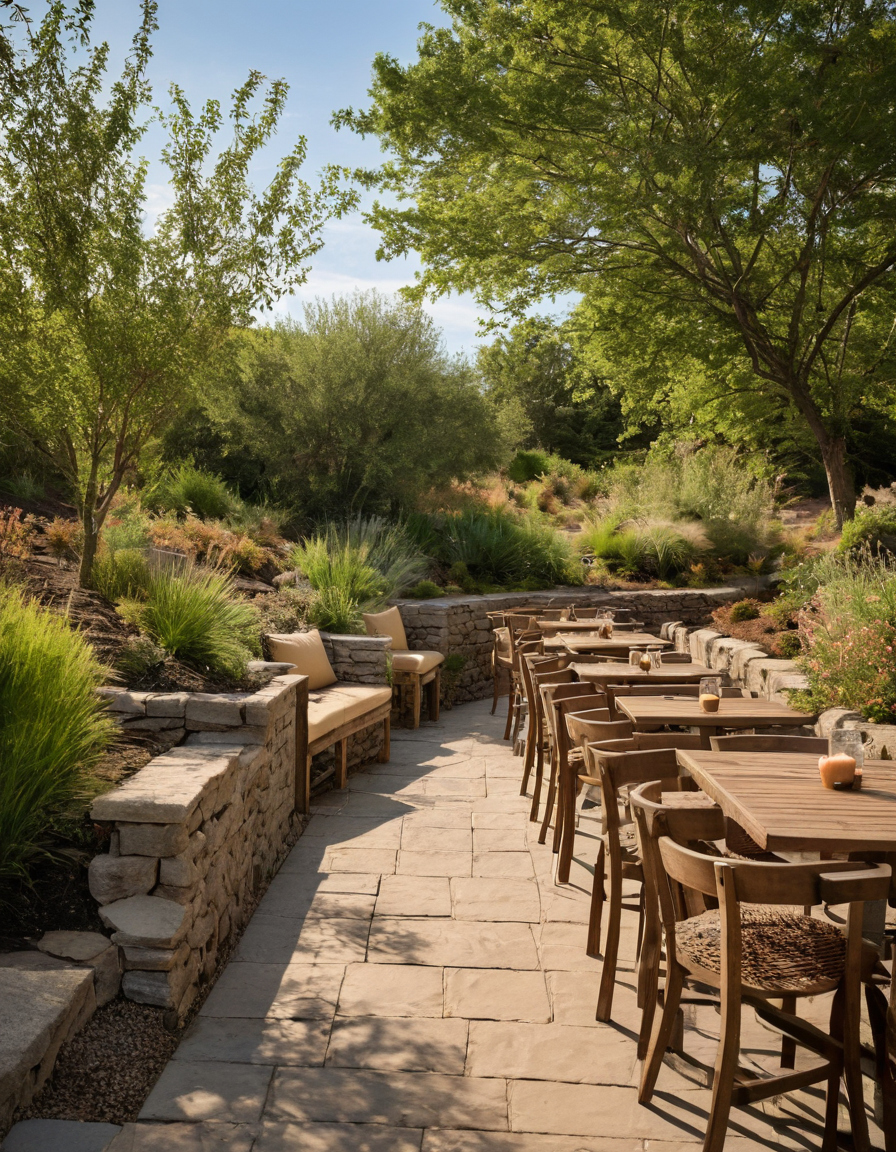
Cleaning, storage, and reset workflows decide whether outdoor restaurant seating stays profitable shown as a landscape planning reference.
What should be on an outdoor seating cleaning checklist?
- Opening: clear leaves, dry seats, wipe table edges, check chair glides, place menus, and confirm umbrellas, heaters, planters, and barriers have not drifted into routes.
- Between turns: clear debris, wipe the tabletop and edge, clean chair seats and arms, reset tabletop items, and follow the approved cleaning or sanitizing process.
- Weekly: check loose bolts, rust points, cracked glides, wobbling bases, peeling powder coat, frayed weave, mildew, and sticky seams.
- Seasonally: maintain wood as recommended, touch up exposed metal, dry cushions before storage, label spare glides and feet, and retire furniture that no longer sits level.
Accessible tables also need to stay functional after reset. The 2010 ADA Standards set accessible dining and work surfaces at 28 to 34 inches above the finish floor or ground, so thick replacement tops or unstable risers should not quietly change usable height.
Which restaurant chairs are easiest to stack, carry, and store?
Stackable side chairs usually create the lowest labor load because one server can consolidate a section before weather moves in. Folding chairs save footprint but can feel temporary. Armchairs improve comfort but need more clearance and storage volume. Benches and outdoor banquettes reduce chair handling, yet they slow flexible table resets.
Chair selection should include the manufacturer’s stack limit, stacked height, chair weight, handhold design, and whether the frame scratches when nested. Storage planning should also cover cushions, umbrellas, heaters, menus, tabletop caddies, and covers.
A smart outdoor restaurant seating purchase includes replacement cycles, spare parts, and brand fit.
Outdoor restaurant seating should be budgeted as a working asset with wear, loss, repairs, and seasonal storage costs. Compare upfront price with warranty, finish life, replacement availability, comfort, visual fit, and how often pieces must be moved, cleaned, stacked, or repaired.
How should operators compare cheap patio furniture with commercial outdoor restaurant seating?
Commercial outdoor restaurant seating usually wins when the patio turns tables daily, because the true cost includes staff handling, wobble complaints, chipped finishes, missing glides, and midseason replacement. Confirm commercial-use coverage, salt-air exclusions, fabric limits, finish touch-up procedures, replacement feet, stacking caps, tabletops, lead times, and whether the same finish will be available next season.
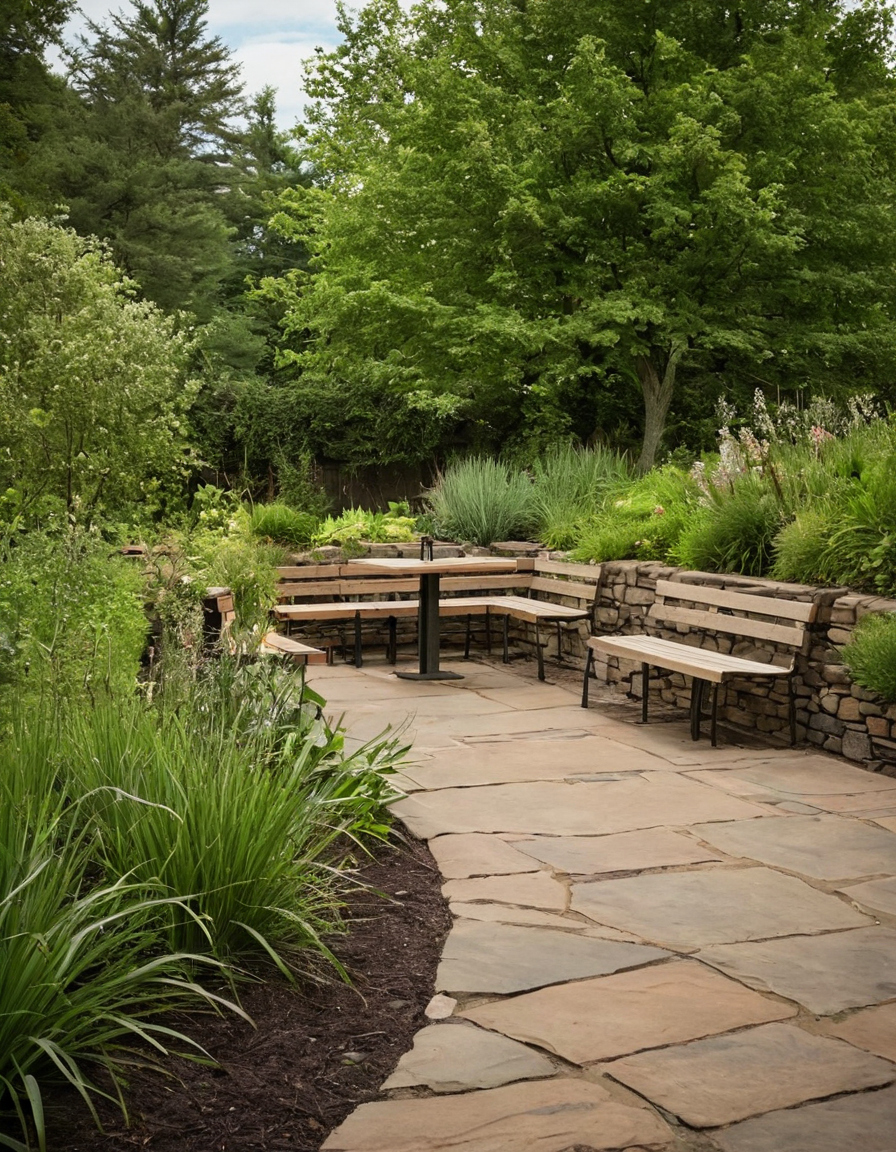
A smart outdoor restaurant seating purchase includes replacement cycles, spare parts, and brand fit shown as a landscape planning reference.
What restaurant tables and chairs fit cafes, bakeries, bars, and full-service patios?
A bakery or coffee patio needs light, stackable restaurant chairs and small tables that hold cups, pastry plates, and phones without trapping crumbs. A lunch cafe needs faster-cleaning tops and chair weights one server can move. A cocktail bar benefits from heavier bases, smaller rounds, and stools only where guests are not balancing full meals.
Wine bars and dinner patios need more dwell-time comfort: wider seats, quieter chair feet, stable tables, and surfaces large enough for bottles, shared plates, water, and candles. ENERGY STAR says qualified LED lighting uses at least 75 percent less energy and lasts up to 25 times longer than incandescent lighting, so durable exterior fixtures belong in the same long-cycle buying plan.
FAQ
What is the best heavy outdoor furniture for windy restaurant patios?
The best heavy outdoor furniture for windy patios is usually commercial powder-coated steel, weighted table bases, or substantial aluminum systems used with manufacturer-approved umbrellas and barriers. Weight helps, but staff storm procedures and local rules matter too.
What is the outside seating area of a restaurant called?
The outside seating area of a restaurant is commonly called a patio, sidewalk cafe, terrace, parklet, roof deck, courtyard, beer garden, or outdoor dining area, depending on location and permit type.
What is the most weather-resistant patio furniture for restaurants?
The most weather-resistant choice depends on climate. Aluminum resists rust and moves easily, resin handles frequent cleaning, teak weathers well with maintenance, and powder-coated steel adds weight where wind is the main problem.
What is the most weather-resistant outdoor table for commercial dining?
A commercial outdoor table with a nonporous top, sealed edges, stable base, replaceable glides, and a warranty for outdoor commercial use is usually safest. Compact laminate, coated metal, resin, and quality composite tops often clean faster than slatted or porous surfaces.
How much space should a restaurant leave between outdoor tables and chairs?
Plan spacing with chairs occupied, not tucked in. Preserve required accessible routes, maintain server paths, and check local permit rules. For sidewalk dining, ADA National Network guidance describes accessible routes generally at least 36 inches wide, with limited short reductions under specific conditions.
0 Comments